$25M Available for Pacific Salmon Recovery Projects Through NOAA's PCSRF Program
Independent platform. Not affiliated with or endorsed by any government agency. Data from public federal sources.
Closed: this opportunity closed on Jun 29, 2026.
The advice in this article still applies to future cycles. Related open opportunities are listed below.
- Climate Program Office (CPO) FY2026 Earth System Science and Services Partnership (deadline Oct 26, 2026)
- DARRP Restoration Implementation Grants (2026) (deadline Nov 18, 2026)
- John H. Prescott Marine Mammal Rescue Assistance Grant (deadline Dec 1, 2026)
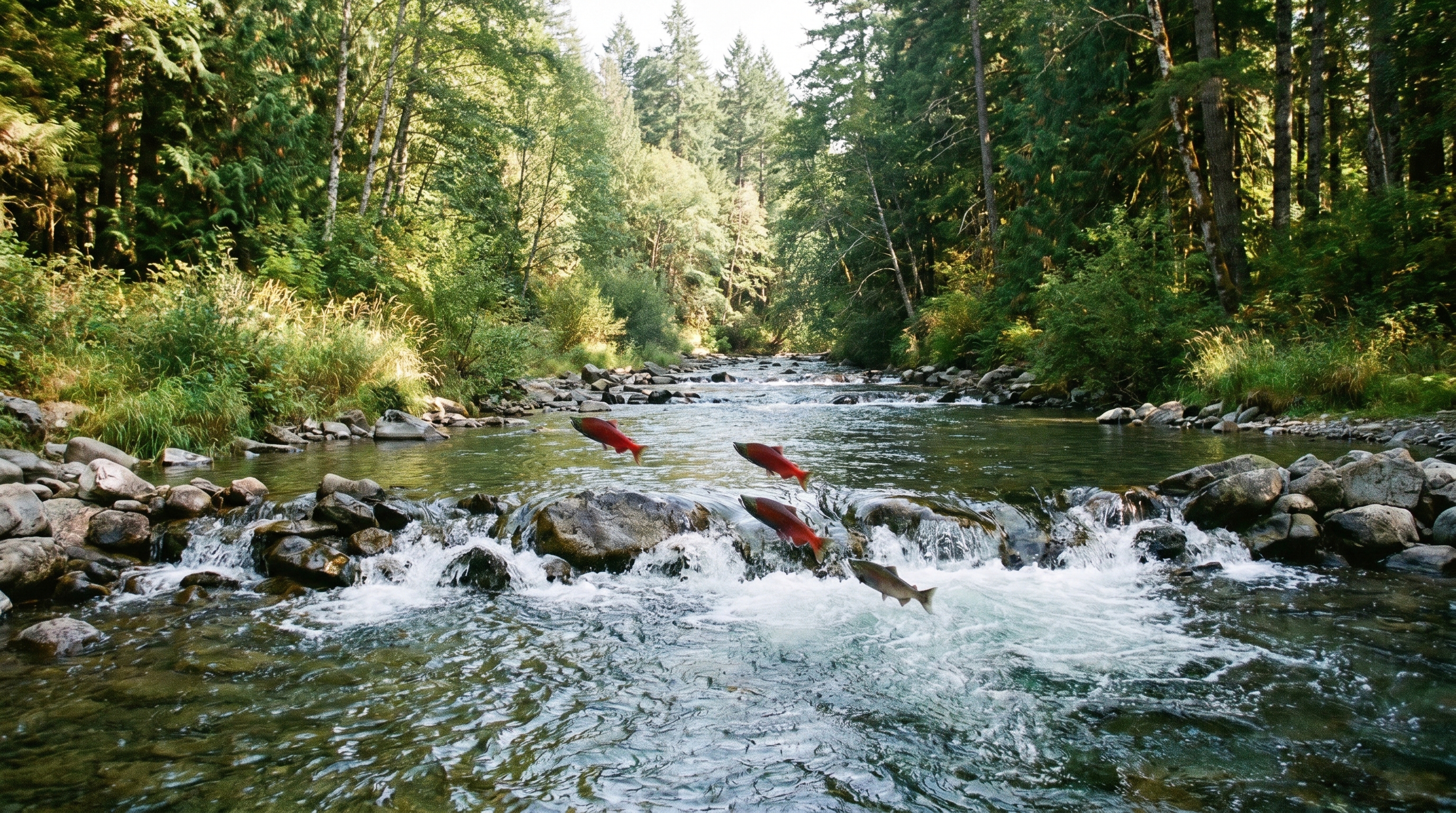
The Pacific Coastal Salmon Recovery Fund (PCSRF) represents one of the federal government's most significant investments in salmon conservation, offering up to $25 million annually to restore Pacific salmon populations across six western states and Alaska. This year's funding announcement combines both Infrastructure Investment and Jobs Act resources and traditional appropriations, creating an exceptional opportunity for states and tribes to advance critical salmon recovery projects.
Who Can Apply for PCSRF Funding
NOAA has designated specific eligible entities for this competitive program. States included are Washington, Oregon, Idaho, Nevada, California, and Alaska. Additionally, all federally recognized tribes of the Columbia River and Pacific Coast regions, including Alaska Native tribes, can submit applications. The program specifically defines federally recognized tribes as those acknowledged by the Secretary of the Interior under the Federally Recognized Indian Tribe List Act of 1994.
This tribal inclusion acknowledges the critical role that Indigenous communities play in salmon conservation and their treaty fishing rights. Native subsistence fishing activities, including those by non-treaty federally recognized tribes, receive explicit recognition in the funding priorities.
What Projects Qualify for Support
PCSRF funding supports three primary categories of salmon conservation work. First, projects that directly benefit salmon and steelhead populations currently listed under the Endangered Species Act as threatened or endangered receive priority consideration. Second, the program funds conservation efforts for populations that states have identified as at-risk for future ESA listing.
The third category focuses on maintaining salmon populations essential for tribal treaty fishing rights and native subsistence activities. This includes habitat restoration projects, fish passage improvements, water quality enhancements, and population monitoring programs. Projects must demonstrate clear connections between proposed activities and measurable benefits to target salmon populations.
Recent successful projects have included dam removal initiatives, streambank restoration, culvert replacements to improve fish passage, and water temperature reduction programs. One notable 2024 project in Oregon received $3.2 million to remove legacy barriers on the Sandy River, reopening 15 miles of spawning habitat for threatened steelhead.
Cost Sharing Requirements and Budget Planning
All PCSRF applications must include matching funds, though NOAA has not specified exact percentages in this announcement. Historically, the program has required 33% non-federal match for most projects, with some flexibility for tribal applicants and habitat acquisition projects. Acceptable match sources include state funds, tribal resources, private donations, volunteer time, and in-kind services.
When calculating volunteer time, NOAA typically accepts the current federal minimum wage rate or documented local wage rates for similar work. Professional services like engineering consultations can count toward match requirements at their full market value. Land donations and conservation easements also qualify as matching contributions at fair market value.
Gold Standard Science Requirements
This year's announcement emphasizes adherence to "Gold Standard Science" principles outlined in Executive Order 14303. All funded projects must demonstrate reproducibility in their methodologies, maintain transparency in data collection and analysis, and clearly communicate scientific uncertainty and error margins.
Successful applications will incorporate peer review processes, establish falsifiable hypotheses for restoration outcomes, and avoid conflicts of interest in project design and implementation. This means your project team should include independent scientific advisors and establish clear protocols for data sharing and results verification.
Application Timeline and Strategic Preparation
With a June 29, 2026 deadline, you have substantial time to develop a competitive application. However, successful PCSRF proposals require extensive preparation, including environmental permitting, tribal consultation, and partnership development. Many winning applicants begin their preparation 12-18 months before submission deadlines.
Start by identifying specific salmon populations your project will benefit and gathering baseline data on current conditions. NOAA reviewers expect detailed population assessments, habitat surveys, and clear metrics for measuring project success. Consider partnering with local universities or research institutions to strengthen your scientific methodology.
State fish and wildlife agencies often coordinate PCSRF applications within their jurisdictions, so contact your state's salmon recovery coordinator early in your planning process. These coordinators can provide guidance on state priorities, help identify potential partners, and review draft proposals before submission.
Maximizing Your Competitive Position
Winning PCSRF proposals typically demonstrate multiple benefits beyond salmon recovery. Projects that also address climate resilience, water quality improvement, or community economic development receive favorable consideration. For example, riparian restoration projects that reduce flood risks while creating salmon habitat appeal to reviewers.
Strong applications also show clear connections to existing recovery plans, whether ESA recovery plans for listed species or state salmon recovery strategies. NOAA prioritizes projects that implement specific actions identified in these science-based planning documents.
Consider proposing projects with measurable outcomes within 3-5 years. While habitat restoration may take decades to show full benefits, successful applicants often include monitoring components that can demonstrate initial positive trends in water quality, habitat availability, or fish passage success rates.
Ready to Apply?
The Pacific Coastal Salmon Recovery Fund offers an exceptional opportunity to make lasting impacts on salmon conservation while building organizational capacity for future grant opportunities. With proper planning and strong partnerships, your project could secure significant federal funding for critical conservation work.
Create your free account on GovGrantsUSA today to access the complete PCSRF application materials, track important deadlines, and connect with other organizations pursuing salmon recovery funding. Our platform provides the tools and resources you need to submit a competitive application for this $25 million opportunity.
USDA Offers Up to $35M for Global School Feeding Programs in... Next
$22 Million Available for High School Exchange Programs Thro...
Related Articles
NOAA Is Handing Out Up to $100M for Coastal Restoration, Are You Ready?
NOAA is offering up to $100 million for marine and coastal habitat restoration through its DARRP program. No cost sharing required. Deadline is November 18, 2026.
PROTECT Grants: Up to $60M Available to Harden America's Transportation Infrastructure
FHWA's PROTECT Competitive Grant Program is offering up to $787M total, with individual awards up to $60M, to harden America's surface transportation systems against climate hazards.
$165 Million Available for Tribal and Federal Lands Transportation Projects Through 2026
The Federal Highway Administration is offering $165 million through 2026 for transportation infrastructure projects serving tribal lands and federal properties. Awards range from $1-30 million.
Find Grants That Match Your Organization
Create a free account, build your profile, and see which federal grants you qualify for.
Get Free Access